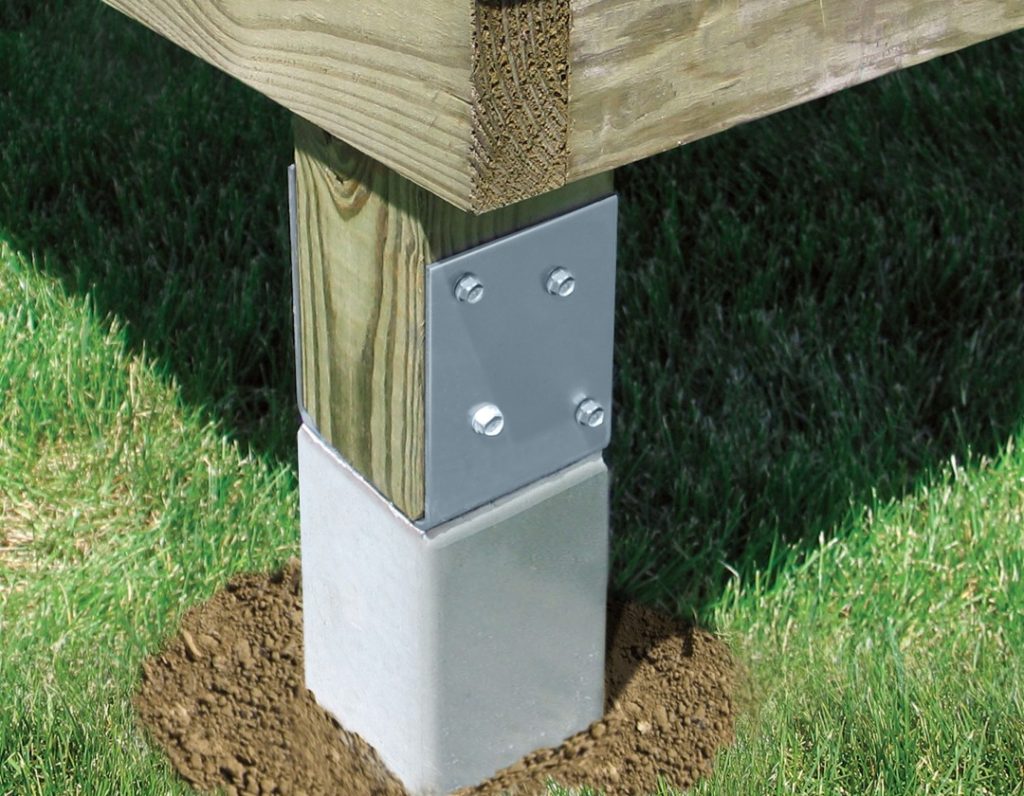
Deck Footings & Foundations
Every deck needs a foundation that transfers the weight of the structure, furniture, people, and snow load down to stable soil below the frost line.
Key Takeaways:
- Deck footings must extend below the frost line — 4 to 6 feet deep in most of Canada
- Three main options: concrete sono tubes ($20–$50 each), helical screw piles ($150–$300 each), and deck blocks ($8–$15 each)
- Most municipalities require footing inspection before framing can begin
- Frost heave is the #1 cause of structural deck failure in Canada
- Helical screw piles are the fastest-growing option — no digging, no concrete, installed in minutes
Why Footings Matter More in Canada
Every deck needs a foundation that transfers the weight of the structure, furniture, people, and snow load down to stable soil below the frost line. In Canada, this is more critical than in moderate climates because of frost heave.
When soil moisture freezes, it expands and pushes upward with enormous force — enough to lift concrete slabs, crack foundations, and tilt deck posts. The only solution is placing footings below the frost line — the depth at which the ground never freezes.
Frost Line Depth by Region
| Region | Frost Line | Cities |
|---|---|---|
| Southern BC | 0.6–1.2m (2–4 ft) | Vancouver, Victoria |
| Southern Ontario | 1.2m (4 ft) | Toronto, Hamilton |
| Northern Ontario | 1.5–1.8m (5–6 ft) | Sudbury, Thunder Bay |
| Quebec | 1.2–1.5m (4–5 ft) | Montreal, Quebec City |
| Prairies | 1.2–1.8m (4–6 ft) | Winnipeg, Edmonton |
| Atlantic | 0.9–1.5m (3–5 ft) | Halifax, St. John's |
Footing Options
Concrete Sono Tubes — $20–$50 each
The traditional method. A cylindrical cardboard form is placed in a hole dug below frost line, filled with concrete, and fitted with a post bracket on top.
- Diameter: 8", 10", or 12" — 10" is standard for residential decks
- Concrete per tube: approximately 2–3 bags (60 lb) per 4-foot tube
- Curing time: 48 hours minimum before loading, 7 days for full strength
- Pros: proven, affordable, high load capacity
- Cons: requires digging (backhoe or post-hole digger), messy, weather-dependent curing
- Typical deck requirement: 6–12 sono tubes for a 300 sq ft deck
Helical Screw Piles — $150–$300 installed
A steel shaft with a helical plate is screwed into the ground using hydraulic equipment. No digging, no concrete, no curing time. Load immediately.
- Brands in Canada: Pylex, Techno Metal Post, GoliathTech, Postech
- Installation time: 15–30 minutes per pile
- Depth: driven until reaching competent soil (typically 6–8 feet)
- Load capacity: 5,000–15,000 lbs per pile (engineered for specific soil conditions)
- Pros: fastest installation, no soil disturbance, year-round installation (even winter), adjustable height
- Cons: higher cost per point, requires specialized equipment, soil testing recommended
- Pylex screw piles are available at Home Depot for DIY-friendly models
Deck Blocks — $8–$15 each
Pre-formed concrete blocks that sit on the ground surface. No digging required.
- Only suitable for: floating decks (not attached to house), decks under 24" above grade
- Maximum deck size: approximately 100 sq ft for freestanding applications
- Pros: cheapest, no permit needed in most cases, instant installation
- Cons: not suitable for Canadian winters in most regions — frost heave will shift the blocks
Important: deck blocks do NOT go below frost line and are not code-compliant for attached or elevated decks in any Canadian province.
Cost Comparison (12-Point Foundation)
| Method | Per Point | 12 Points | Installation Time |
|---|---|---|---|
| Sono tubes (DIY) | $25–$40 | $300–$480 | 2–3 days |
| Sono tubes (contractor) | $80–$150 | $960–$1,800 | 1 day |
| Helical piles | $150–$300 | $1,800–$3,600 | 3–4 hours |
| Deck blocks | $8–$15 | $96–$180 | 1–2 hours |
Permit and Inspection Requirements
In most Canadian municipalities, footing installation requires:
- Building permit — obtained before any work begins
- Footing inspection — inspector verifies depth, diameter, and soil conditions before concrete pour or before framing begins
- Setback compliance — footings must be minimum distance from property lines (typically 0.6–1.2m)
Call your local building department before digging. In many cities, you also need a utility locate (call before you dig — dial 811 in most provinces) to identify buried gas, water, and electrical lines.
When you need deck footings & foundations in Ottawa
Ottawa Deck Works is the team Ottawa homeowners trust. Every deck needs a foundation that transfers the weight of the structure, furniture, people, and snow load down to stable soil below the frost line.
How Ottawa Deck Works handles deck footings & foundations
- 01Get in touch — Reach out and we'll schedule a free on-site assessment in Ottawa.
- 02We assess & quote — You get a clear, written quote — no obligation, no surprises.
- 03We get to work — Our licensed, insured crew does the job right — the first time.
What's Included
What every deck footings & foundations call covers


Other Services
Composite Decking
Low-maintenance, durable decking engineered for Ottawa's challenging climate.
Learn more→Pressure-Treated Wood Decking
Pressure-treated (PT) lumber is softwood — typically Spruce-Pine-Fir (SPF) or Southern Yellow Pine — that has been infused with chemical preservatives under…
Learn more→Cedar Decking
Natural, beautiful wood decking with superior weather resistance.
Learn more→Ready to get started?
Get in touch for a free quote on your project in Ottawa.
Frequently Asked Questions
Common questions about this service
Homeowners in Ottawa can typically expect their deck project to wrap up in 3-5 business days, based on the project's specific details and dimensions. We outline a full, precise timeline for your project when we first sit down together.
Customer Reviews
What our customers say about deck footings & foundations